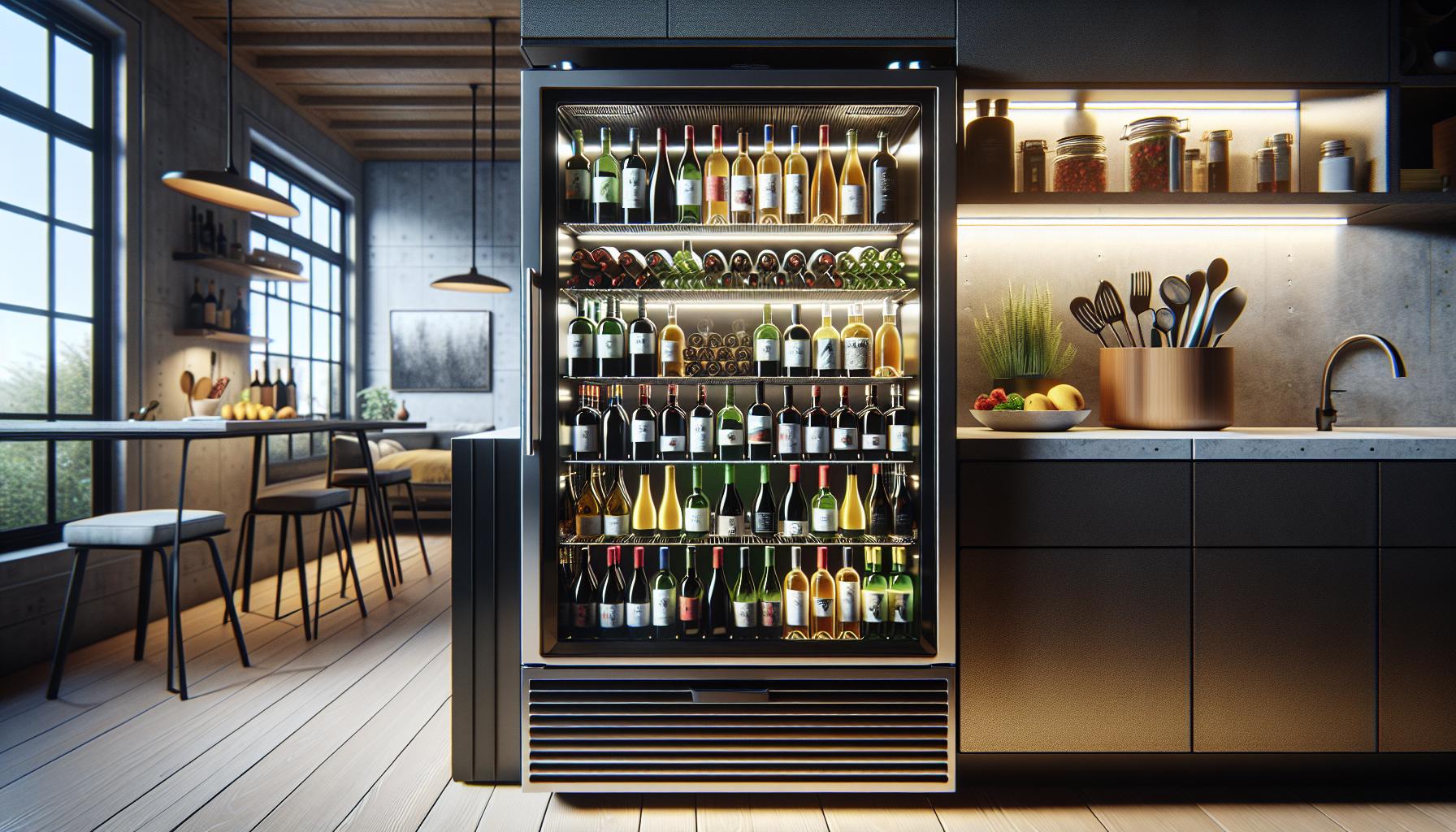
Ever found yourself staring at your wine cooler, wondering if it could moonlight as a beer fridge? You’re not alone. Many of us have faced the dilemma of whether we can store our beloved brews in that sleek, temperature-controlled haven designed for wine.
Obsah
- Key Takeaways
- Understanding Wine Coolers
- Can a Wine Cooler Be Used for Beer?
- Pros and Cons
- Alternatives to Wine Coolers for Beer
- Conclusion
- Frequently Asked Questions
- Can I store beer in a wine cooler?
- What temperature should I set my wine cooler for beer storage?
- Will a wine cooler affect the taste of my beer?
- How many beer bottles can a wine cooler hold?
- Is humidity control important for storing beer in a wine cooler?
- Are there any disadvantages to storing beer in a wine cooler?
- What’s the advantage of using a wine cooler for beer?
- Are there alternatives to wine coolers for beer storage?
- Is a wine cooler more expensive than a standard refrigerator for beer storage?
- Can a wine cooler be repurposed for other beverages besides beer?
Key Takeaways
- Versatility of Wine Coolers: While designed for wine, wine coolers can be used for beer storage with proper considerations for temperature, storage capacity, and humidity control.
- Temperature Differences: Wine coolers typically maintain temperatures between 45°F and 65°F, suitable for wine, but beer often requires cooler temperatures, especially lagers at 45°F to 50°F.
- Storage Capacity and Configuration: Wine coolers are designed for wine bottles and may need shelving adjustments to efficiently store different shapes and sizes of beer bottles and cans.
- Humidity Concerns: Wine coolers maintain higher humidity to preserve wine quality, which could impact beer packaging by causing labels to peel or caps to rust over time.
- Pros and Cons: Wine coolers offer consistent temperature control, space efficiency, and energy savings but may pose challenges in temperature adequacy, storage capacity, and higher initial costs.
- Alternative Solutions: Dedicated beer fridges and kegerators provide optimal conditions for beer storage, maintaining the ideal temperatures and offering tailored features for beer enthusiasts.
Understanding Wine Coolers
Wine coolers are often questioned for their versatility in storing different beverages. Let’s dive into the specifics to better understand their function and types.
What Is a Wine Cooler?
A wine cooler is a specialized appliance designed to store wine at optimal temperatures. It maintains a stable environment, ensuring wine retains its flavor and quality. Unlike regular refrigerators, wine coolers operate at higher temperatures, typically between 45°F and 65°F. These coolers offer humidity control to prevent corks from drying out. Shelves are designed to hold wine bottles securely, keeping them slightly tilted to keep the cork moist. Thermoelectric and compressor cooling systems are commonly used, making them energy-efficient and quiet. Common features include digital temperature controls, UV-protected doors, and vibration reduction systems.
Types of Wine Coolers
Wine coolers come in various types to suit different needs. Single-zone coolers maintain one temperature throughout, ideal for a specific type of wine. Dual-zone coolers offer two compartments with separate temperature settings. These are perfect for storing red and white wines simultaneously. Built-in coolers are designed to install under countertops, blending seamlessly with kitchen cabinetry. Freestanding models are versatile, allowing placement anywhere with access to an electrical outlet. Smaller countertop coolers cater to those with limited space, holding a few bottles at once. There are also portable options for those who travel frequently or enjoy outdoor activities.
Understanding these aspects will help when considering if a wine cooler can also store beer effectively.
Can a Wine Cooler Be Used for Beer?

Using a wine cooler for beer is possible, but specific factors must be considered to ensure optimal storage.
Temperature Considerations
Beer and wine require different storage temperatures. Wine coolers typically hold wine between 45°F and 65°F. Beer, however, generally needs cooler temperatures. Ales are best around 50°F to 55°F, while lagers need 45°F to 50°F. Single-zone wine coolers might not be versatile enough. Dual-zone models offer better flexibility. Some wine coolers can be adjusted, but they may not reach the ideal beer storage range. Consistently check the temperature settings. If adjusting doesn’t work, beer might end up too warm or too cold. This temperature difference affects the beer’s taste and carbonation.
Storage Capacity
Storage capacity impacts the practicality of using a wine cooler for beer. Wine coolers often prioritize vertical bottle storage. Beer cans and bottles vary in shapes and sizes. Adjusting the shelving is often necessary to accommodate beer. Wine coolers might not store large quantities efficiently. Beer requires more space vertically and horizontally, especially for different bottle types. Compact wine coolers might not meet beer storage needs if space is limited. It’s crucial to measure the interior dimensions. This ensures all beer types fit comfortably. Storing beer in a wine cooler might limit the available capacity compared to storing wine.
Humidity Control
Humidity control in wine coolers is common to maintain wine quality. Beer doesn’t require the same humidity levels. Wine coolers with high humidity can potentially affect beer packaging. Labels on beer bottles might peel off if exposed to too much humidity. Cans could develop condensation, leading to potential rust over time. Monitor the humidity settings in the wine cooler. Adjust if necessary to ensure the beer remains intact. It’s best to check the cooler’s specifications. Some wine coolers allow for better humidity control customization, which is beneficial for beer storage.
While a wine cooler can store beer, attention to temperature, storage capacity, and humidity is crucial for maintaining beer quality.
Pros and Cons
Using a wine cooler for beer storage offers both benefits and drawbacks. Understanding these can help decide if it’s a practical solution.
Advantages of Using a Wine Cooler for Beer
Many wine coolers are versatile enough for beer storage. The key here is the consistent temperature control they offer. Unlike refrigerators, which often fluctuate, wine coolers keep a steady temperature. This feature ensures the beer maintains its intended taste and carbonation.
Space efficiency stands out as another benefit. Wine coolers often come with adjustable shelves. This allows for accommodating various bottle sizes and shapes, catering to different beer styles. Energy efficiency also plays a significant role. Wine coolers generally consume less power compared to traditional refrigerators, resulting in cost savings over time.
Aesthetic appeal can’t be overlooked. Wine coolers often boast sleek designs that can enhance a room’s decor. This makes them a stylish addition to kitchens or home bars.
Disadvantages of Using a Wine Cooler for Beer
However, there are downsides to consider. The main issue involves temperature. Beer typically requires colder storage, around 45-55°F, whereas wine coolers often range from 50-60°F. This slight difference may affect the beer’s taste and longevity if not monitored closely.
Storage capacity also presents challenges. Wine coolers are designed for wine bottles, which are generally taller and slimmer than beer bottles. This can result in inefficient use of space and make it difficult to store a variety of beer bottle shapes and sizes.
Humidity levels are another concern. Wine coolers maintain higher humidity to preserve corks, but such conditions might impact beer cans and bottle caps. Over time, high humidity can cause labels to peel and caps to rust, compromising the beer’s presentation and quality.
Lastly, the cost could be a consideration. Wine coolers tend to be more expensive than standard refrigerators. While the long-term energy savings are notable, the initial investment might not justify the benefits for some users.
Alternatives to Wine Coolers for Beer

Finding the right storage option ensures your beer stays at its best. Here are some alternatives to wine coolers for beer.
Dedicated Beer Fridges
Dedicated beer fridges offer numerous benefits. These appliances maintain the ideal temperatures for beer, which falls typically between 35°F and 45°F. Unlike wine coolers, beer fridges provide enough space for various beer bottle sizes and cans. Internal shelves are often adjustable to accommodate different packaging.
Manufacturers design them with beer in mind, meaning there’s usually ample door storage. Advanced models even offer dual temperature zones, catering to different beer styles. Standalone beer fridges also come with dedicated beer features like built-in bottle openers and spill-resistant shelves.
Energy efficiency is a crucial factor. Modern beer fridges consume less energy compared to older standard fridges, leading to lower utility bills. Besides functionality, the sleek designs of these appliances can complement modern kitchen aesthetics.
A dedicated beer fridge offers the best conditions for maintaining beer quality. With adjustable storage options, energy efficiency, and dedicated features, it’s a solid choice.
Kegerators
Kegerators provide a unique solution for beer enthusiasts. These units store and dispense draft beer, ensuring you enjoy a fresh pour every time. They maintain precise temperature control, usually between 32°F and 38°F, perfect for draft beer.
A kegerator typically holds one or several kegs, reducing the need for multiple bottles or cans. This not only saves space but also offers a more eco-friendly option by minimizing packaging waste. CO₂ tanks ensure the beer stays carbonated, maintaining its quality and taste.
The draft system includes taps, making it easy to serve beer at gatherings or parties. Additionally, most kegerators feature lockable wheels, enhancing portability. Integrated drip trays make cleaning and maintenance straightforward.
For anyone who loves draft beer, a kegerator provides a premium experience. The ability to keep beer fresh and properly carbonated, coupled with its eco-friendliness and convenience, makes it an excellent alternative for beer storage.
Conclusion
While wine coolers can be used for beer storage they aren’t always the perfect solution. They offer consistent temperature control and a sleek design but may fall short in terms of space and specific temperature needs. Dedicated beer fridges and kegerators provide more tailored options for beer enthusiasts ensuring optimal storage conditions and ample space. Ultimately the choice depends on your specific needs and preferences. Whether you opt for a wine cooler or a specialized beer fridge it’s crucial to consider factors like temperature control storage capacity and humidity to keep your beer in the best possible condition.
Frequently Asked Questions
Can I store beer in a wine cooler?
Yes, you can store beer in a wine cooler. However, it’s important to adjust the temperature settings appropriately since beer generally requires a cooler temperature than wine.
What temperature should I set my wine cooler for beer storage?
Beer is best stored at a temperature between 45-55°F, depending on the type. Adjust your wine cooler’s settings to match this range for optimal beer storage.
Will a wine cooler affect the taste of my beer?
No, as long as the cooler maintains a consistent and appropriate temperature, it will not affect the taste of your beer.
How many beer bottles can a wine cooler hold?
The storage capacity varies by model. Generally, wine coolers are designed for wine bottles, so the number of beer bottles they can hold may be fewer due to different shapes and sizes.
Is humidity control important for storing beer in a wine cooler?
Yes, humidity control is important. Too much humidity can damage beer labels and packaging. Ensure your wine cooler has reliable humidity control or store beer appropriately to avoid damage.
Are there any disadvantages to storing beer in a wine cooler?
Some disadvantages include potential temperature variations, limited storage capacity for beer bottles, possible humidity issues, and a higher cost compared to standard refrigerators.
What’s the advantage of using a wine cooler for beer?
Advantages include consistent temperature control, space efficiency, energy efficiency, and an aesthetic appeal that can complement home decor.
Are there alternatives to wine coolers for beer storage?
Yes, alternatives such as dedicated beer fridges and kegerators offer precise temperature control, ample storage space, energy efficiency, and features tailored specifically for beer storage.
Is a wine cooler more expensive than a standard refrigerator for beer storage?
Yes, wine coolers typically cost more than standard refrigerators, but they offer specific advantages like consistent temperature control and aesthetic benefits.
Can a wine cooler be repurposed for other beverages besides beer?
Absolutely, wine coolers can be used to store a variety of beverages, including soft drinks, cider, and even bottled water, given that the temperature settings are appropriate.