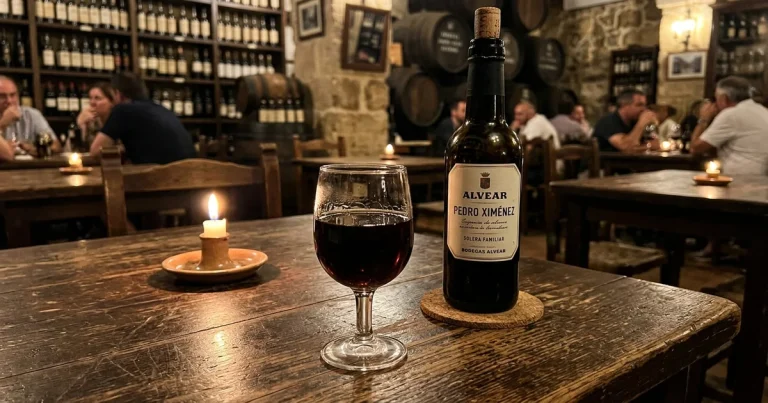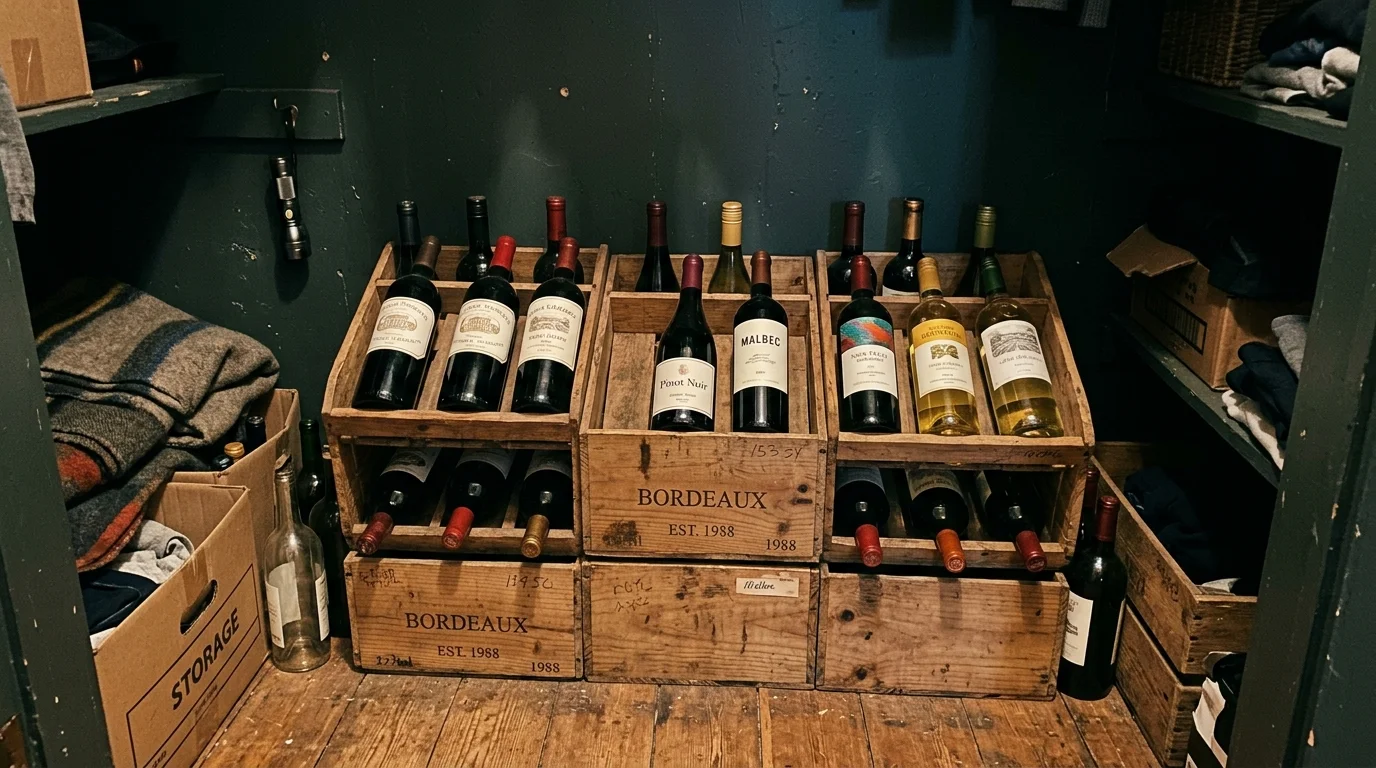
Building a functional diy wine storage without refrigerator requires finding a dark, temperature-stable spot in your home to protect your bottles from premature aging. Achieving proper Temperature Consistency without expensive electronic climate control is completely possible for apartment dwellers and budget-conscious wine enthusiasts.
We discovered that simple household adjustments can mimic a professional wine cellar, effectively saving your favorite vintages from dreaded Cork Oxidation. However, there is one critical detail most people overlook when choosing a storage location that can ruin your collection—and you will discover how to avoid it below.
Obsah
- How to Store Wine Without a Refrigerator (Quick Summary)
- Key Environmental Factors: Managing Temperature Swings and Ambient Humidity
- Best Non-Frigid Storage Locations: Utilizing Interior Closets and Under Stairs
- Step-by-Step DIY Racks: Using Repurposed Materials and Wooden Crates
- Budget Insulation Hacks: PVC Piping and Cardboard Boxes for Thermal Shielding
- Common Mistakes: Locations Away From Oven and Heat Sources
- Frequently Asked Questions
How to Store Wine Without a Refrigerator (Quick Summary)
You can absolutely preserve wine safely at home without investing in an expensive wine fridge. The secret lies in systematically minimizing environmental stressors that degrade wine quality over time.
- Control Thermal Exposure: Keep bottles in rooms with steady ambient temperatures.
- Block Light Exposure: Shield your bottles from direct sunlight and harsh UV rays.
- Minimize Vibration: Prevent micro-vibrations from foot traffic or heavy home appliances.
- Store Bottles Horizontally: Keep liquid in constant contact with the cork to maintain an airtight seal.
Keeping bottles lying flat ensures the cork remains moist and expanded. This tight seal is crucial for maximizing longevity after opening, preventing unwanted oxygen from spoiling your wine. Always select a dark, quiet location and avoid busy hallways where constant footsteps can rattle your storage racks.
Key Environmental Factors: Managing Temperature Swings and Ambient Humidity
The single biggest enemy of fine wine is rapid environmental fluctuation. Frequent temperature swings cause liquid expansion and contraction inside the bottle, forcing oxygen past the cork seal.
To protect your collection, prioritize managing these two core variables:
- Target Temperature Range: Choose a location that stays consistently between 55°F and 65°F. Avoid spots near exterior walls or heat vents.
- Maintain Ambient Humidity: Aim for approximately 60% ambient humidity to keep natural corks from drying out and shrinking.
You can easily regulate local Humidity without specialized equipment. Simply place a small shallow tray of water or damp pebbles near your wine rack, allowing natural evaporation to maintain ideal moisture levels.
Best Non-Frigid Storage Locations: Utilizing Interior Closets and Under Stairs
Modern homes contain valuable dead space that can easily be transformed into a DIY wine cellar. Finding the right storage location is essential for preserving quality and serving wine and whiskey perfectly when entertaining guests.
1. Interior Closets
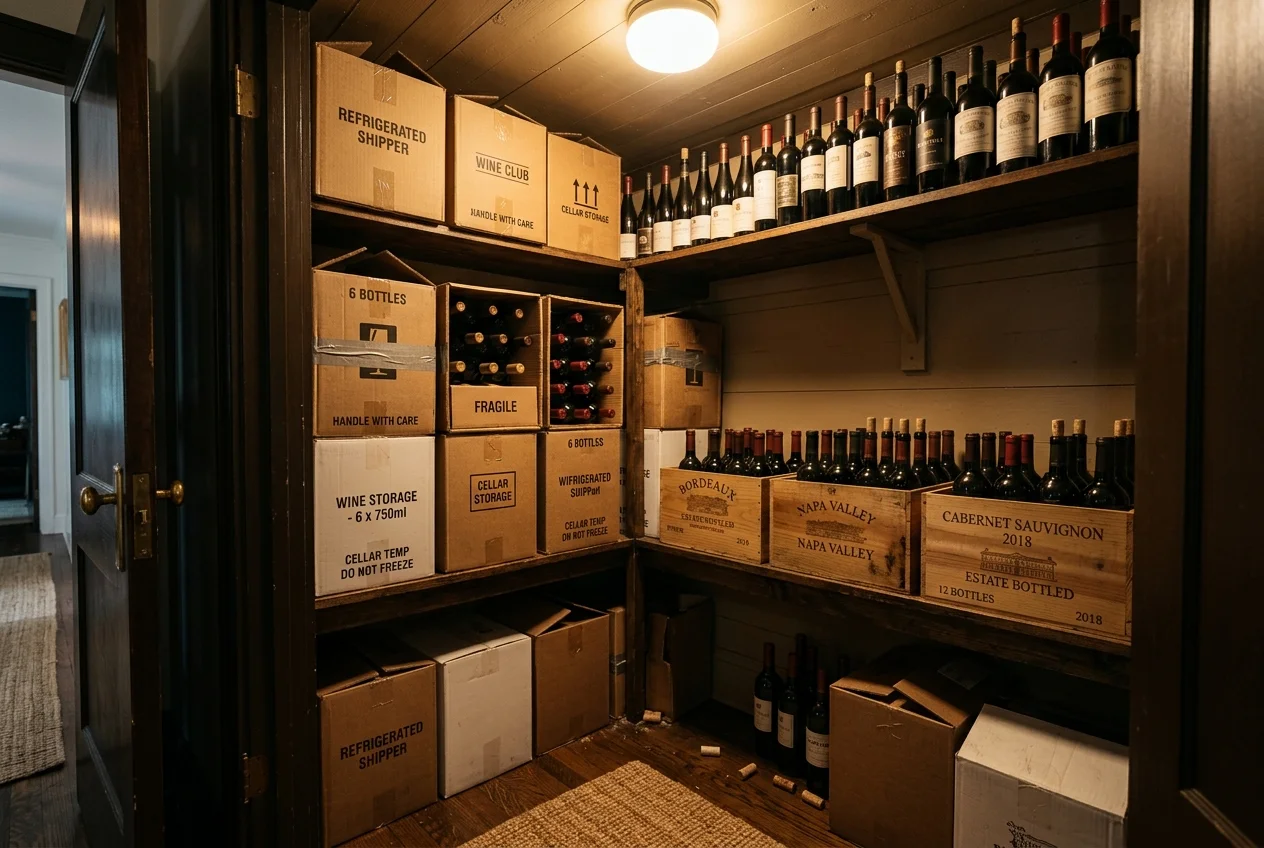
An interior closet that does not border external walls offers a remarkably stable microclimate shielded from drafty windows and sunlight.
2. Under Stairs Dead Space
The unused area under stairs creates a naturally cool, insulated bunker tucked safely away from daily household activity and light.
Step-by-Step DIY Racks: Using Repurposed Materials and Wooden Crates
Crafting custom wine racks from repurposed materials is both eco-friendly and extremely budget-friendly.
- Modular Wooden Crates: Stack sturdy wooden crates horizontally to create scalable, interlocking bottle shelves.
- Upcycled Pallets: Repurpose heavy-duty wood Pallets into rustic floor racks or compact hanging units.
- Wall-Mounted Solutions: Install wall-mounted brackets in dark corners to maximize vertical space when floor area is limited.
Keeping stored bottles completely stationary is essential. Stillness allows natural Sediment (harmless organic particles found in aged wines) to settle gently at the bottom, guaranteeing a crystal-clear pour every time.
Budget Insulation Hacks: PVC Piping and Cardboard Boxes for Thermal Shielding
You do not need expensive specialized equipment to safeguard your wine collection against heat spikes.
Simple household supplies provide superb thermal protection:
- Honeycomb PVC Piping Racks: Cut clean PVC Piping into short individual cylinders and glue them into a modular honeycomb structure.
- Insulated Cardboard Boxes: Heavy-duty cardboard boxes deliver excellent Thermal Insulation by creating a protective air buffer around your bottles.
Thick cardboard slows down heat transfer during hot days, shielding wine from sudden temperature shifts. Implementing these clever DIY techniques ensures you experience the dual delights of proper storage without spending a fortune.
Common Mistakes: Locations Away From Oven and Heat Sources
Avoiding critical storage errors is just as important as building the rack itself.
Be sure to eliminate these hazardous storage spots:
- Kitchen Cabinets & Ovens: Avoid storing bottles near cooking appliances or high cabinets where trapped heat constantly rises.
- Radiators & Vents: Keep wine racks far from heating elements and laundry dryers.
- Direct Window Light: Direct sunlight releases harmful UV Light, which breaks down wine compounds and causes unpleasant “lightstrike” off-flavors.
To preserve your wine’s true flavor profile, always position your DIY racks in low, windowless, grounded areas of your home.
Frequently Asked Questions
Can you store wine long-term without a refrigerator?
Yes, you can store wine without a refrigerator by keeping bottles in a dark, temperature-stable environment like an interior closet or basement corner. Maintaining steady temperatures between 55°F and 65°F prevents premature aging. Keeping bottles horizontal protects corks from drying out, ensuring proper seal and maximizing longevity after opening.
How do temperature swings affect wine when stored without a fridge?
Frequent temperature swings cause wine liquid to expand and contract inside the bottle. This process forces air past the cork, causing cork oxidation and spoiling the delicate flavor profiles. To prevent heat damage, choose a windowless interior room away from kitchen appliances and external walls.
What repurposed materials work best for DIY wine storage?
Wooden crates, thick cardboard boxes, and PVC piping are ideal repurposed materials for custom wine storage racks. Wooden crates provide sturdy modular framing, while cardboard boxes offer surprisingly effective thermal insulation against quick temperature spikes when stacked neatly inside dark, unused home closets.
How do you manage ambient humidity without a wine cellar?
To regulate ambient humidity without specialized equipment, place a shallow tray filled with damp pebbles or water near your DIY storage rack inside an enclosed space. Maintaining 60% to 70% humidity keeps corks moist, preventing shrink and stopping unwanted oxygen from ruining your stored wine.
Where should you avoid putting DIY wine storage in your house?
Remember to avoid placing DIY wine storage racks near ovens, laundry dryers, windows exposed to UV light, or exterior walls prone to weather fluctuation. Kitchens and attics experience severe heat spikes, while top shelves absorb rising warmth. Stick to low, grounded interior spots like closets or under stairs.
[contact-form-7 id=”1″ title=”Contact Form”]
Get our latest guides, news, and insights highlighted in your Google Search & AI Overviews.