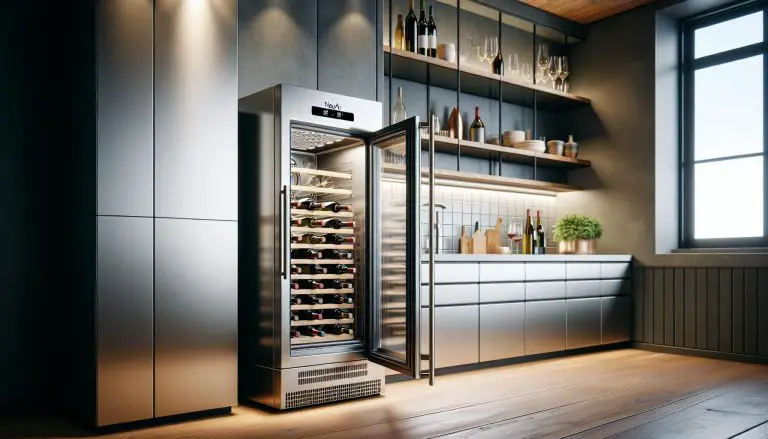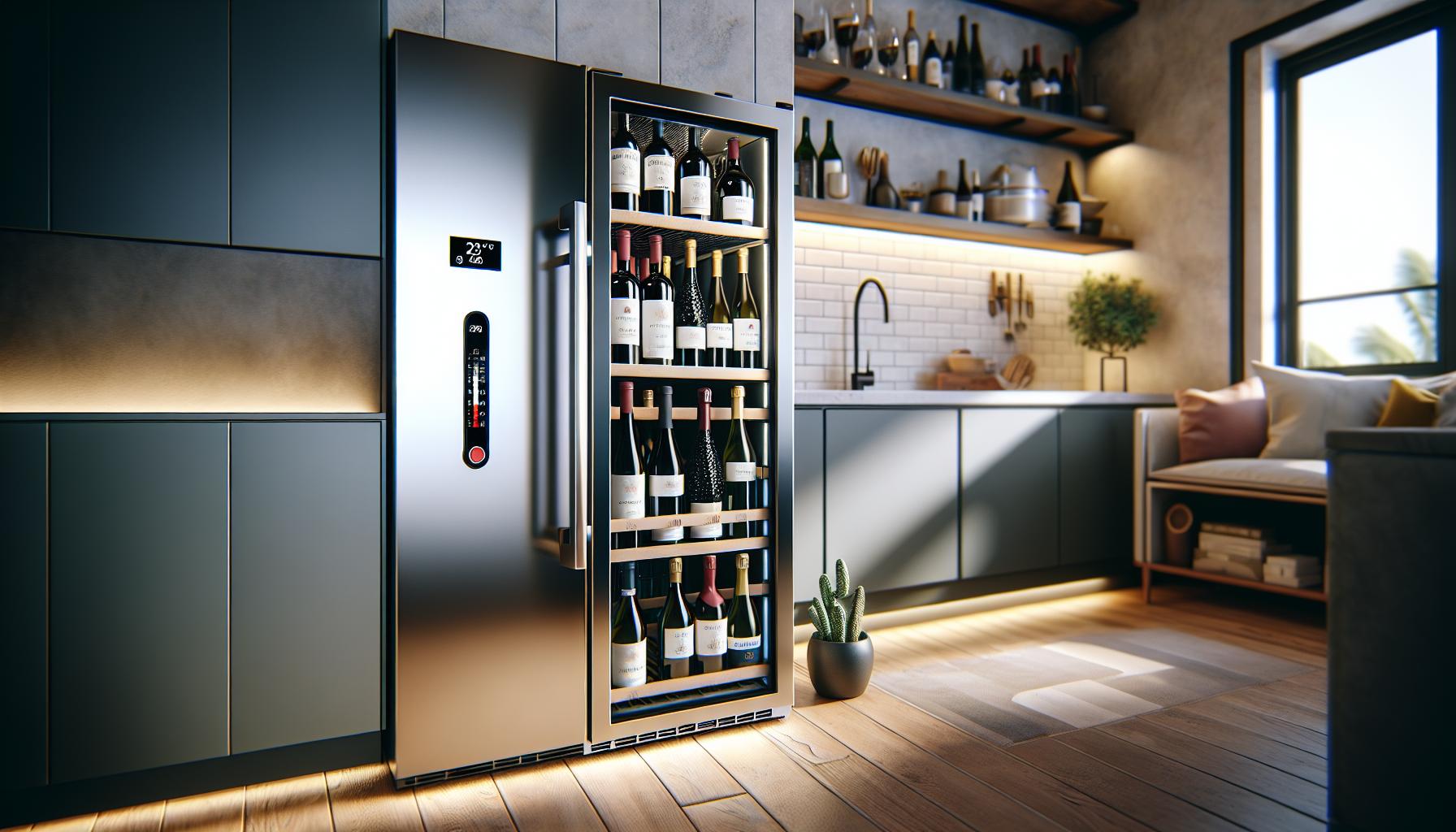
Ever found yourself staring at your wine cooler, wondering if your prized bottles are chilling at the perfect temperature? You’re not alone. The right temperature can make or break your wine experience, transforming a good bottle into a great one. But what temperature should a wine cooler be set at to achieve that?
Obsah
- Key Takeaways
- Understanding Wine Cooler Temperatures
- Ideal Temperature Ranges
- Factors Influencing Temperature Settings
- Tips for Maintaining Optimal Temperatures
- Common Mistakes to Avoid
- Conclusion
- Frequently Asked Questions
- What temperature should Cabernet Sauvignon be stored at?
- What is the ideal storage temperature for Chardonnay?
- Can I store sparkling wines in the same cooler as red wines?
- Why is it important to maintain precise temperatures in a wine cooler?
- What are common mistakes to avoid when setting wine cooler temperatures?
- How can I ensure my wine cooler maintains optimal temperatures?
- Is a single-zone or dual-zone cooler better for storing different wine types?
- How often should I check the temperature in my wine cooler?
Key Takeaways
- Optimal Temperature for Wine: Red wines like Cabernet Sauvignon should be stored at 60-65°F, white wines such as Chardonnay at 45-50°F, and sparkling wines like Champagne at around 40-50°F.
- Temperature Stability: Maintaining a consistent temperature is crucial for preserving the taste and aging potential of your wine. Modern wine coolers with digital thermostats can help achieve this.
- Humidity and Bottle Positioning: Monitor humidity levels around 70% and position bottles correctly, with reds higher and closer to the cooler source and whites on lower shelves.
- Influencing Factors: Consider wine type, storage duration, and ambient temperature when setting your wine cooler to ensure optimal preservation.
- Maintenance Tips: Regularly monitor cooler temperatures, place the cooler in a well-ventilated, shaded area, and avoid opening the door frequently to minimize temperature fluctuations.
- Avoid Common Mistakes: Don’t ignore wine-specific temperature needs, overload the cooler, or place it near heat sources. Consider using dual-zone coolers for different wine types.
Understanding Wine Cooler Temperatures
Setting the right temperature in a wine cooler isn’t just a detail; it’s crucial. Different wines require specific temperatures to maintain their flavors and aromas. For instance, red wines like Cabernet Sauvignon thrive at 60-65°F. Conversely, white wines such as Chardonnay are best at 45-50°F. Sparkling wines find their sweet spot at around 45°F.
Temperature stability is another key factor. Fluctuations can damage the wine, affecting its taste and aging potential. Ensuring your wine cooler keeps a consistent temperature is vital. Modern wine coolers often come with digital thermostats, making this task easier. Always refer to the manufacturer’s guidelines for adjustments.
Humidity also plays a role. Most wines prefer a humidity level of around 70%. While not all wine coolers can control humidity, it’s beneficial to monitor this aspect if possible. Proper storage conditions help preserve cork quality and prevent oxidation.
Finally, positioning wine bottles correctly contributes to temperature consistency. Place red wines on top shelves, closer to the cooling source, and white wines on lower shelves. This setup ensures each type of wine receives optimal conditions for its storage requirements.
Ideal Temperature Ranges

Achieving the ideal temperature range for storing wine in a cooler is crucial for maintaining its flavor and quality. Different types of wine have specific temperature needs.
Red Wines
Red wines need consistent temperatures for optimal taste. For full-bodied reds like Cabernet Sauvignon and Merlot, keep the cooler between 60-65°F. Lighter reds like Pinot Noir are best stored at 55-60°F. Exposure to temperatures outside this range can affect the wine’s bouquet and aging process. Position red wine bottles horizontally to keep the cork moist, preventing air from entering and spoiling the wine.
White Wines
White wines thrive in cooler conditions compared to reds. Varietals like Chardonnay and Sauvignon Blanc should be stored at 45-50°F. This temperature range enhances their fruity and floral notes. For those who enjoy their white wine more chilled, 50-55°F can also be acceptable. Storing whites at lower temperatures helps preserve their crispness and acidity. Horizontally place the bottles in the cooler to ensure proper preservation.
Sparkling Wines
Sparkling wines, including Champagne and Prosecco, demand specific temperatures. The ideal range is 40-50°F for optimal carbonation and freshness. Serving temperature can drop to 38-45°F for immediate enjoyment. Preserving the bottle’s effervescence is critical to the wine’s overall experience. Store these wines in a more upright position to minimize cork contact with wine, reducing the risk of premature oxidation.
By meticulously following these temperature guidelines, wine enthusiasts can ensure their cooler maintains the perfect environment for each type of wine.
Factors Influencing Temperature Settings

Determining the right temperature for a wine cooler involves considering several factors. Each of these factors helps ensure the wine retains optimal flavor and aroma.
Wine Type
Different wines require different temperatures for optimal storage. Red wines, like Cabernet Sauvignon and Merlot, should be set between 60 and 65 degrees Fahrenheit. Pinot Noir, a more delicate red, prefers slightly cooler settings between 55 and 60 degrees Fahrenheit. White wines, such as Chardonnay and Sauvignon Blanc, need cooler temperatures between 45 and 50 degrees Fahrenheit. For sparkling wines like Champagne, maintain a cooler range of 40 to 50 degrees Fahrenheit to preserve carbonation. Adjusting the cooler based on wine type is essential for achieving the best taste.
Storage Duration
The length of time you plan to store the wine also impacts the temperature settings. Long-term storage requires a more precise temperature to keep the wine from aging prematurely. For long-term storage, maintain reds at around 55 degrees Fahrenheit, a bit cooler than for immediate consumption. White wines and sparkling wines should remain at a steady 45 degrees Fahrenheit for long-term storage. If you expect to consume the wine within a few weeks, middle-range temperatures can keep it ready to drink while preserving its quality.
Ambient Temperature
Ambient temperature around the wine cooler affects the internal settings. If the cooler is in a room without air conditioning, external temperature fluctuations could impact its efficiency. It’s best to place the cooler in a stable environment where room temperature remains relatively constant. Extremely hot or cold surroundings could force the cooler’s mechanism to work harder, potentially leading to inconsistent internal temperatures. Ensure cooler placement in a well-regulated area to maintain the set temperature.
By considering these factors, setting the correct temperature for your wine cooler becomes straightforward and ensures the best preservation for your wines.
Tips for Maintaining Optimal Temperatures
Maintaining the correct temperature ensures your wine stays in the best condition. Let’s explore some actionable tips to achieve this.
Regular Monitoring
Check the temperature of your wine cooler frequently. Use a reliable thermometer to ensure accuracy. Digital thermometers can provide precise readings. Inspect the cooler at least once a week. This helps in catching any deviations early. Consistent monitoring prevents potential spoilage. If you notice any irregularities, address them immediately. Adjust the settings as needed to maintain the ideal range. For instance, red wines like Cabernet Sauvignon and Merlot should be at 60-65°F. Pinor Noir requires slightly cooler conditions, around 55-60°F.
Proper Placement
Choose the right spot for your wine cooler. Avoid placing it near heat sources. Kitchens or sunny rooms can cause temperature spikes. Instead, opt for a cooler, shaded area. Ensure there’s enough ventilation around the cooler. Blocked vents can lead to inefficient cooling. Keep it away from direct sunlight. UV rays can damage the wine, impacting its taste. Also, avoid placing it in areas with high humidity. Excess moisture can affect the cooler’s functionality, leading to mold growth.
Avoiding Temperature Fluctuations
Maintain a consistent temperature in your wine cooler. Fluctuations can harm the wine’s quality. Avoid opening the cooler door frequently. Each time you open it, warm air enters, altering the temperature. Check the cooler door’s seal regularly. A good seal prevents external air from entering. Insulate the cooler if it’s placed in a room with temperature variations. Use thermal covers or insulation wraps. This helps maintain a steady internal temperature. If you store different types of wines, consider dual-zone coolers. They allow for different temperatures in separate compartments, ensuring each wine type gets optimal conditions.
Common Mistakes to Avoid
Ignoring wine type leads to suboptimal storage. Each wine variety requires specific temperatures to preserve its flavor. Storing a Cabernet Sauvignon at the same temperature as a Chardonnay affects quality.
Placing the cooler near heat sources disrupts the internal climate. Heat sources include ovens, heaters, and direct sunlight. This placement causes temperature fluctuations, which harm wine storage.
Overloading the cooler stifles airflow. Proper ventilation is vital for maintaining consistent temperatures. Crowding bottles compromises the cooler’s efficiency.
Neglecting regular temperature checks risks spoilage. A reliable thermometer ensures the cooler remains at the ideal setting. Many people forget to perform these checks, leading to potential issues.
Frequent door openings destabilize the cooler’s environment. Every time the door opens, warm air enters, causing fluctuations. Minimizing door usage helps maintain stable temperatures.
Using a single-zone cooler for different wine types creates problems. Different wines need distinct temperatures for proper storage. Dual-zone coolers provide a solution for storing various types simultaneously.
Conclusion
A wine cooler’s temperature settings are crucial for preserving the unique flavors and qualities of different wines. By understanding the specific needs of red, white, and sparkling wines, you can ensure each bottle is stored correctly. Regular monitoring and proper placement of your cooler can prevent common mistakes and maintain an ideal environment for your collection. Investing in a dual-zone cooler is also a smart move if you enjoy a variety of wines. Remember these key points, and your wine will always be ready to impress.
Frequently Asked Questions
What temperature should Cabernet Sauvignon be stored at?
Red wines like Cabernet Sauvignon should be stored at 60-65°F to preserve their flavors optimally and enhance the wine-drinking experience.
What is the ideal storage temperature for Chardonnay?
Chardonnay, a white wine, requires a storage temperature of 45-50°F to maintain its flavor profile effectively.
Can I store sparkling wines in the same cooler as red wines?
Yes, but it’s essential to use a dual-zone wine cooler. Sparkling wines like Champagne are best stored at 40-50°F, while red wines need 60-65°F.
Why is it important to maintain precise temperatures in a wine cooler?
Precise temperatures help preserve the wine’s flavors, ensuring an optimal tasting experience. Incorrect temperatures can negatively impact a wine’s characteristics.
What are common mistakes to avoid when setting wine cooler temperatures?
Avoid ignoring wine type, placing the cooler near heat sources, overloading it, neglecting temperature checks, frequent door openings, and using single-zone coolers for different wines.
How can I ensure my wine cooler maintains optimal temperatures?
Regularly monitor with a reliable thermometer, place the cooler away from heat sources and sunlight, and minimize door openings to prevent temperature fluctuations.
Is a single-zone or dual-zone cooler better for storing different wine types?
Dual-zone coolers are better for storing various wine types simultaneously because they allow different temperature settings for different wines, which is crucial for preserving their unique flavors.
How often should I check the temperature in my wine cooler?
Regular checks are recommended. Using a reliable thermometer helps ensure that your wine cooler maintains the optimal temperature for each type of wine, enhancing preservation.
Get our latest guides, news, and insights highlighted in your Google Search & AI Overviews.