✨ This article was AI edited. Editorial responsibility: MPWWine.com.
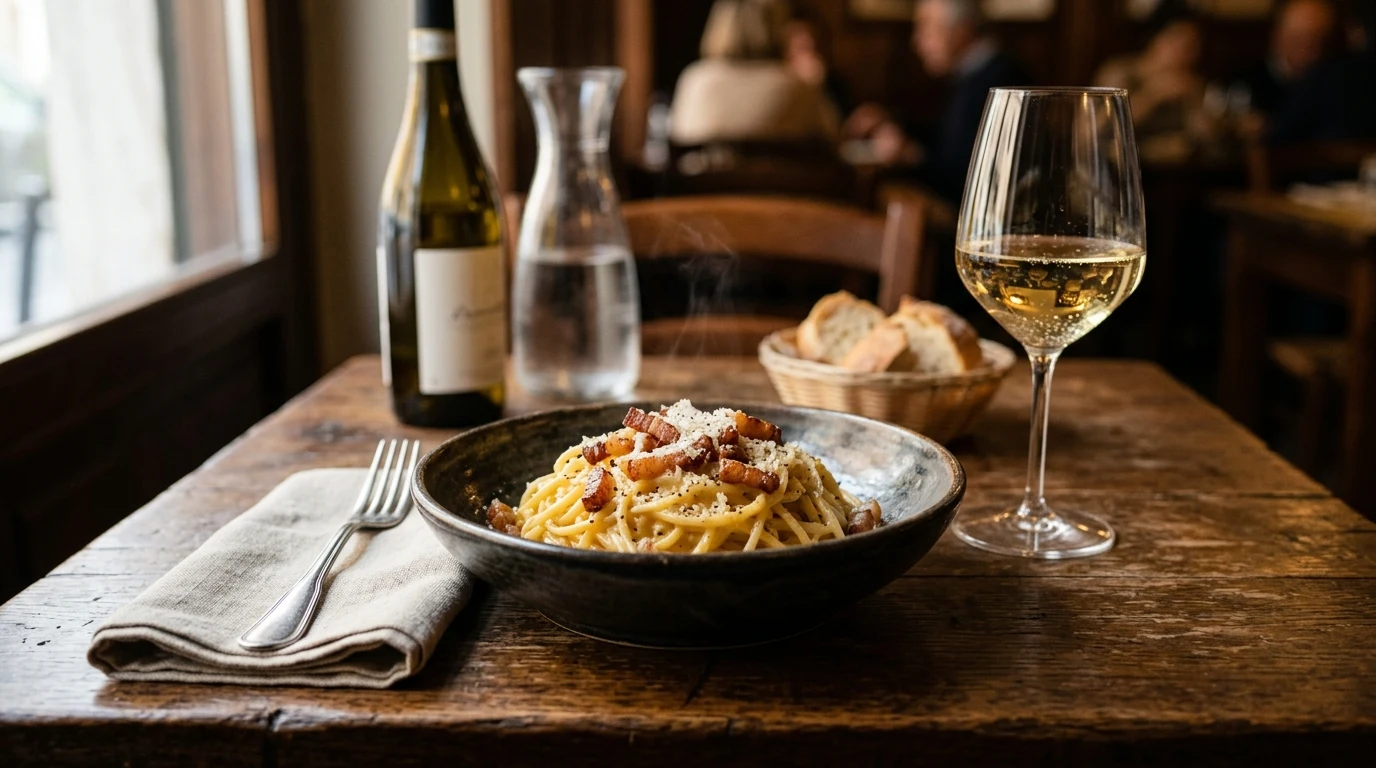
The ideal vino da abbinare alla carbonara (wine to pair with pasta carbonara) requires high natural acidity, mineral sapidity, and moderate alcohol to cut through the rich rendered fat of crispy guanciale, coat the velvety egg yolk liaison, and balance the sharp, salty punch of aged Pecorino Romano DOP. Traditional Roman choices center on structured regional whites like Frascati Superiore DOCG, crisp Marche Verdicchio, sparkling Franciacorta Metodo Classico, and low-tannin reds such as Cesanese del Piglio.
Pasta alla carbonara stands as one of the undisputed crowns of Roman culinary heritage. Made with a deceptively simple roster of potent ingredients—thick-cut cured pork jowl (guanciale), farm-fresh egg yolks, finely grated Pecorino Romano DOP, and freshly cracked Tellicherry black pepper tossed with al dente spaghetti or rigatoni—it presents a formidable challenge for sommeliers and wine enthusiasts. When exploring the classic Italian question of quale vino abbinare alla carbonara, one must navigate the intense interplay between rich animal fats, savory cheese proteins, and sharp peppercorn heat.
Obsah
- The Science of Sommelier Pairing: Contrast vs. Harmony
- Top White Wines to Pair with Carbonara (I Migliori Vini Bianchi)
- Wine Pairing Comparison Matrix for Pasta alla Carbonara
- Can You Drink Red Wine with Carbonara? (Vino Rosso e Carbonara)
- Why Sparkling Metodo Classico Is the Ultimate Modern Pairing
- Serving Temperatures and Glassware Recommendations
- Frequently Asked Questions (FAQ)
The Science of Sommelier Pairing: Contrast vs. Harmony
According to the classic Italian Sommelier Association (AIS) methodology, successful food and wine pairings rely primarily on structural contrast. The organoleptic profile of carbonara features several distinct taste sensations that demand precise structural counterparts in your wine glass:
1. Savoriness, Fatty Richness, and Acidity
Guanciale renders a substantial amount of luscious, monounsaturated fat during slow pan-crisping. Furthermore, the emulsion of egg yolks and grated cheese coats the oral cavity with a rich, lipid-dense film. To cleanse the palate between each bite, the companion wine must offer:
- Crisp Tartaric and Malic Acidity: Natural fruit acids stimulate salivation, breaking down lipid coatings and refreshing taste receptors.
- Persistent Carbonation (Perlage): In sparkling wines, the physical scrubbing action of carbon dioxide bubbles instantly lifts heavy fats from the tongue.
2. Starch Sweetness and Egg Creaminess vs. Sapidity and Alcohol
Durum wheat semolina pasta and pasture-raised egg yolks exhibit a subtle intrinsic sweetness (tendency to sweet). This requires a wine with distinct mineral sapidity and moderate alcohol (12.5% to 13.5% ABV) to impart warmth and dry the palate without overwhelming the dish’s delicate egg texture.
3. Sharp Pecorino Saltiness and Black Pepper Pungency
Pecorino Romano DOP is an ancient sheep’s milk cheese celebrated for its intense salinity and piquant bite. When high-salt cheeses meet heavy, aggressive tannins, the palate experiences an intensely bitter, unpleasant metallic clash. Therefore, any red wine considered for carbonara must feature smooth, resolved, or minimal tannins, supported by ample fruit glycerol and spicy aromatic intensity.
Top White Wines to Pair with Carbonara (I Migliori Vini Bianchi)
White wines remain the sommelier’s first recommendation for carbonara due to their lack of astringent tannins and elevated refreshing acidity:
1. Frascati Superiore DOCG (Lazio) — The Historic Roman Terroir Match
There is an old Italian adage: what grows together, goes together. Cultivated on the fertile, mineral-rich volcanic soils of the Castelli Romani just southeast of Rome, Frascati Superiore is crafted predominantly from Malvasia del Lazio (Malvasia Puntinata) and Trebbiano. It delivers aromas of golden apples, wild herbs, bitter almonds, and white blossom. On the palate, a streak of flinty volcanic salinity cuts cleanly through guanciale fat while echoing the savory depth of Pecorino cheese.
2. Verdicchio dei Castelli di Jesi Classico Superiore (Marche)
Widely regarded as one of Italy’s greatest indigenous white varieties, Verdicchio offers a rare combination of structural weight and laser-sharp citrus acidity. With notes of green apple, crisp pear, aniseed, and a hallmark bitter almond finish, a structured Verdicchio effortlessly handles the dense emulsion of egg yolk and pasta starch.
3. Soave Classico DOC (Veneto)
Produced from Garganega grapes grown on ancient basaltic hillside slopes in Veneto, a mature Soave Classico displays stone fruit, lemon curd, and crushed mineral complexity. Its textured, waxy mid-palate harmonizes with creamy pasta while maintaining pristine balance.
4. Fiano di Avellino DOCG (Campania)
From the volcanic and clay hills of Irpinia, Fiano is a powerhouse Italian white known for notes of toasted hazelnut, wild mint, and smoked stone fruit. Its remarkable tension and structured persistence make it an extraordinary partner for a heavily peppered carbonara.
Wine Pairing Comparison Matrix for Pasta alla Carbonara
Review the comprehensive comparison matrix below to select the ideal bottle based on wine style, Italian region, flavor profile, and sommelier rating:
| Appellation & Region | Style & Dominant Grapes | Aromatic & Palate Profile | Key Pairing Mechanism | Sommelier Score |
|---|---|---|---|---|
| Frascati Superiore DOCG (Lazio) | Dry White (Malvasia Puntinata, Trebbiano) | Citrus blossom, crushed volcanic gravel, green almond | Classic regional harmony; mineral acidity cuts through guanciale. | 9.8 / 10 |
| Franciacorta Extra Brut (Lombardy) | Metodo Classico Sparkling (Chardonnay, Pinot Nero) | Toasted brioche, golden apple, persistent creamy perlage | Mechanical bubble scrubbing cleanses rich egg and fat emulsion. | 9.9 / 10 |
| Verdicchio dei Castelli di Jesi (Marche) | Structured White (Verdicchio) | Crisp pear, Mediterranean herbs, savory almond finish | High acidity with textured body matches pasta chew and yolk richness. | 9.6 / 10 |
| Cesanese del Piglio DOCG (Lazio) | Light-to-Medium Red (Cesanese) | Wild cherry, white pepper, silky non-aggressive tannins | Ideal red choice; zero metallic tannin clash with Pecorino Romano. | 9.2 / 10 |
| Trento DOC Brut (Trentino) | Metodo Classico Sparkling (100% Chardonnay) | Mountain citrus, flint stone, chalky dry acidity | Crisp Alpine energy provides total palate reset after every bite. | 9.7 / 10 |
| Grechetto di Todi DOC (Umbria) | Medium-Bodied White (Grechetto) | Yellow peach, dry hay, herbal bitters, warm finish | Stands up to robust tellicherry peppercorn heat and cheese salinity. | 9.1 / 10 |
Can You Drink Red Wine with Carbonara? (Vino Rosso e Carbonara)
While white and sparkling wines are technically superior, many wine lovers insist on enjoying red wine with pasta. The golden rule is simple: avoid high-tannin reds at all costs.
The Danger of Heavy Tannins with Egg and Cured Pork
Heavy, oaked reds such as young Barolo (Nebbiolo), Brunello di Montalcino, or Cabernet Sauvignon contain high concentrations of condensed tannins. When these tannins bind with the salivary proteins in your mouth in the presence of intense sodium from Pecorino Romano and egg albumin, they create an aggressive, metallic, astringent bitterness that ruins both the wine and the dish.
The Best Low-Tannin Red Alternatives
If serving red wine, select vibrant, fruit-driven, low-tannin bottles fermented in stainless steel or concrete vats:
- Cesanese del Piglio DOCG: The premier red grape of Lazio, grown in the hills of Frosinone. It yields aromatic notes of sour cherry, mulberry, and cracked white pepper with delightfully supple, velvet tannins.
- Frappato di Vittoria (Sicily): An exuberant, pale ruby red bursting with pomegranate, wild strawberry, and floral hibiscus notes. Served with a slight cellar chill (14°C–15°C), it complements the savory pork without fighting the cheese.
- Alto Adige Schiava or Pinot Noir: Translucent, ruby-hued mountain reds offering bright red berry fruit, alpine herbs, and ultra-gentle tannins that glide across the palate.
Why Sparkling Metodo Classico Is the Ultimate Modern Pairing
Modern fine-dining establishments across Rome and Milan frequently recommend traditional method sparkling wines (Metodo Classico) as the pinnacle pairing for carbonara. Whether pouring a Franciacorta Satèn, a Trento DOC Extra Brut, or an authentic Champagne, sparkling wine represents the ultimate culinary foil.
The prolonged aging on yeast lees (typically 24 to 36 months) imparts complex aromatic notes of toasted sourdough and roasted hazelnuts that mirror the nutty character of aged Pecorino and seared guanciale. Concurrently, the thousands of microscopic bubbles act as an effervescent squeegee across the tongue, effortlessly lifting heavy fats and leaving the palate revitalized and ready for the next decadent mouthful.
Serving Temperatures and Glassware Recommendations
Serving your wine at the proper temperature is essential for managing acidity, alcohol perception, and aromatics:
- Structured White Wines (Frascati, Verdicchio, Soave): Serve at 10°C to 12°C (50°F–54°F) in medium-sized tulip glasses to allow volcanic minerality and stone fruit aromatics to aerate without overheating the alcohol.
- Metodo Classico Sparkling (Franciacorta, Trento DOC): Serve at 8°C to 10°C (46°F–50°F) in curved white wine glasses rather than narrow flutes to preserve yeast complexity.
- Chilled Light Reds (Cesanese, Frappato): Serve slightly chilled at 14°C to 15°C (57°F–59°F) to accentuate fresh berry acidity and keep tannins supple.
Frequently Asked Questions (FAQ)
What is the absolute best wine to pair with pasta alla carbonara?
The traditional regional benchmark is Frascati Superiore DOCG from Lazio, whose crisp volcanic acidity cleanses the palate from rich guanciale. For a luxurious modern alternative, a dry sparkling Franciacorta or Trento DOC Metodo Classico provides the ultimate effervescent contrast.
Why do bold red wines clash with carbonara?
Bold red wines like Cabernet Sauvignon, Barolo, or Syrah contain high levels of tannins. When heavy tannins interact with the high salt content of Pecorino Romano and the delicate protein emulsion of egg yolks, they produce an unpleasantly bitter, dry, metallic aftertaste.
Can you drink Prosecco with carbonara?
While Prosecco can be enjoyed in a casual setting, its tank-fermented fruitiness and softer perlage are often overshadowed by the rich, savory weight of guanciale and Pecorino. A dry, yeast-aged Metodo Classico sparkling wine is far more effective.
Does Chardonnay pair well with carbonara?
Yes, but unoaked or lightly oaked Chardonnay is preferred. An overly buttery, heavily oaked New World Chardonnay adds too much heavy vanilla and butter to an already rich dish. Crisp Chablis or Italian Chardonnays from Alto Adige or Franciacorta work wonderfully.
Get our latest guides, news, and insights highlighted in your Google Search & AI Overviews.