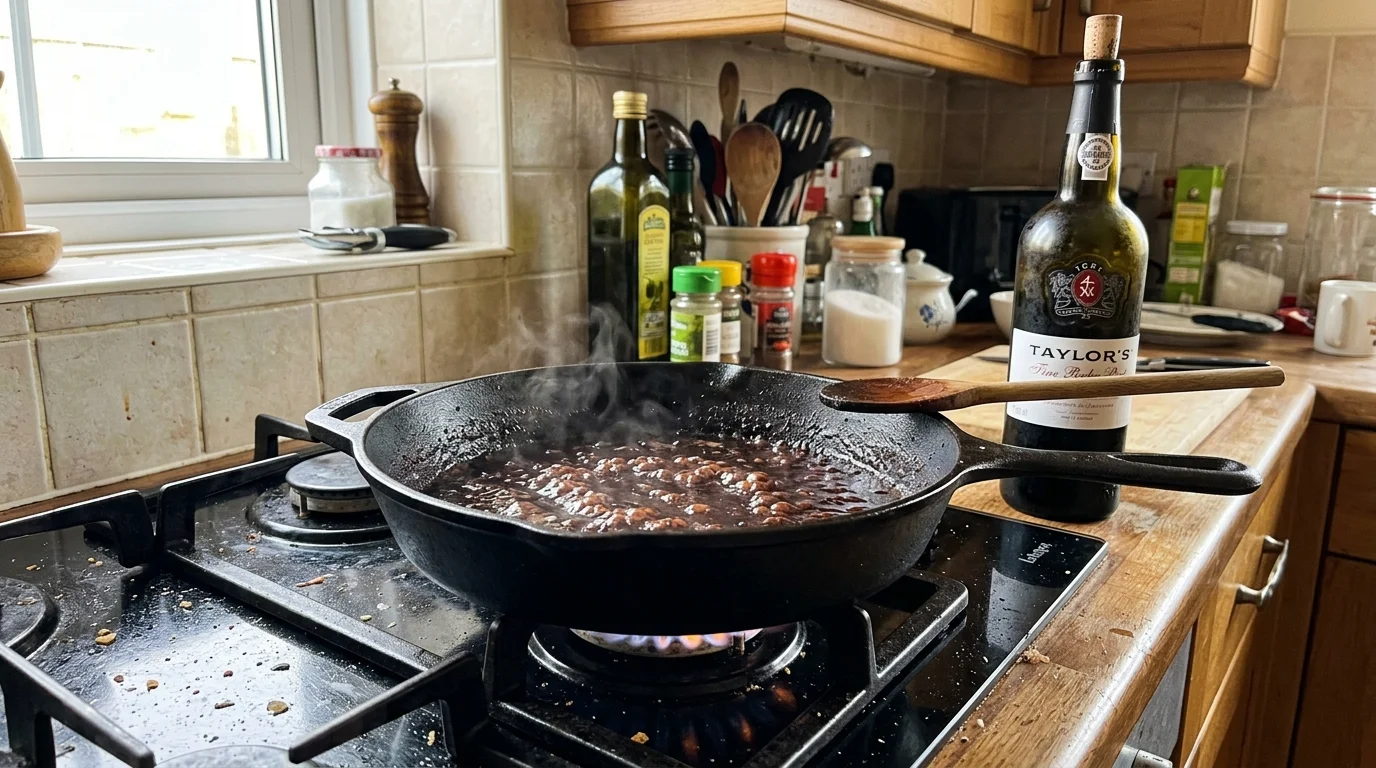
The perfect example of best port for cooking is an affordable, entry-level Ruby Port for savory pan sauces or a young Tawny Port for sweet dessert glazes.
When searing a steak, reaching for an expensive vintage bottle can result in a bitter, sticky reduction that ruins your sauce.
The secret to restaurant-quality pan sauces lies in choosing the right budget-friendly bottle that thrives under heat application.
The best example of port for cooking is an entry-level Ruby Port (under $15–$20) for savory reductions, beef braises, and steak pan sauces, or a Tawny Port for caramel and dessert glazes. Avoid costly vintage bottles because heat destroys delicate aromatics, and avoid salt-heavy commercial “cooking wines.”
Obsah
- Example of Best Port for Cooking: Ruby vs. Tawny Profiles
- Top Budget-Friendly Port Brands for Kitchen Reductions
- How to Cook with Port Wine: Deglazing, Braising, and Pan Sauces
- Best Substitutes for Port Wine in Recipes
- How Long Does Opened Port Wine Last in the Pantry?
- Common Mistakes to Avoid When Cooking with Fortified Wines
- Conclusion: Choosing the Right Port for Your Next Dish
- Frequently Asked Questions
Example of Best Port for Cooking: Ruby vs. Tawny Profiles
Understanding the differences between Ruby and Tawny Port is essential for choosing the right bottle for your recipe.
Ruby Port is aged in stainless steel or giant oak vats, retaining its dark garnet color and vibrant, fresh berry aromas.
Its high acidity and natural sweetness make it perfect for deglazing stainless steel cookware and crafting savory steak pan sauces.
In contrast, Tawny Port ages in wooden casks for years, exposing the liquid to controlled oxidation.
This aging process creates rich notes of caramel, dried fig, and toasted nuts that shine in sweet dessert glazes and poached fruit sauces.
🍷 Ruby Port (Savory Dishes)
- Flavor Profile: Vibrant red fruits, blackberry, plum, and subtle pepper.
- Best Cooking Use: Beef pan sauces, red wine reductions, and meat braises.
- Heat Performance: High acidity prevents heavy reduction sauces from cloying.
- Recommended Dishes: Filet mignon, lamb chops, and game meats.
🥜 Tawny Port (Sweet & Pork)
- Flavor Profile: Toasted hazelnut, golden raisin, caramel, and butterscotch.
- Best Cooking Use: Dessert glazes, poached pears, and pork tenderloin reductions.
- Heat Performance: Oxidative character adds depth without bitter notes.
- Recommended Dishes: Poached pears, chocolate tart, duck breast, and pork chops.

Top Budget-Friendly Port Brands for Kitchen Reductions
When selecting a bottle for deglazing or simmering, look for a cheap port for cooking under $20 rather than an expensive vintage port.
High temperatures instantly destroy subtle vintage nuances, making affordable non-vintage fortified wine for cooking the top culinary choice.
For savory reductions, Taylor Fladgate Fine Ruby and Graham’s Six Grapes Reserve offer robust berry concentration and balanced acidity.
If your recipe calls for nutty caramel complexity, Sandeman Fine Tawny delivers exceptional depth for dessert sauces at an accessible price.
Stick to entry-level bottles priced between $12 and $18. Brands like Taylor Fladgate, Graham’s, and Sandeman maintain high winemaking standards that yield rich, glossy pan sauces without straining your grocery budget.
How to Cook with Port Wine: Deglazing, Braising, and Pan Sauces
Port wine turns pan drippings into restaurant-quality sauces through proper heat technique and timing.
Selecting the best wines for deglazing ensures you lift all the delicious browned bits (fond) stuck to your pan after searing meat.
After removing your protein, pour 1/2 cup of Ruby Port into the hot skillet, scraping the bottom with a wooden spoon as the liquid simmers rapidly.
To create a rich reduction sauce, add beef stock and shallow-simmer until the mixture thickens into a glossy glaze that coats the back of a spoon (nappe consistency).
When braising short ribs or beef roast, substitute half of your beef stock with Ruby Port to infuse deep flavor and tenderize tough meat fibers.
Best Substitutes for Port Wine in Recipes
If you don’t have Port in your pantry, finding a reliable port wine substitute can save your sauce.
Madeira is the closest alternative, offering vibrant acidity and rich caramelized notes that thrive in heavy reductions.
Marsala works exceptionally well for chicken and pork recipes, providing warm amber sweetness and nutty undertones.
If only standard dry red wine is available, combine 1 cup of Cabernet Sauvignon or Syrah with 1 tablespoon of brown sugar and a splash of brandy to mimic Port’s sweetness and alcohol body.
How Long Does Opened Port Wine Last in the Pantry?
Understanding the shelf life of opened port is a major advantage for home cooks compared to standard table wine.
Because producers add distilled grape spirits during fermentation, Port resists oxidation much longer than regular red wine.
An opened bottle of Ruby Port remains vibrant for 4 to 6 weeks when recorked and kept in a cool pantry or refrigerator.
Because Tawny Port has already undergone cask oxidation, an opened bottle stays fresh for 2 to 3 months without losing quality.
Common Mistakes to Avoid When Cooking with Fortified Wines
Avoid buying grocery store products sold as commercial “cooking wine.”
These bottles are packed with excessive salt and chemical preservatives that ruin the balance of your dish.
Spending time understanding fortified wines ensures you always pick genuine, drinkable bottles for your kitchen.
Additionally, never boil Port rapidly over high heat. High sugar concentration causes rapid scorching, leaving your pan sauce bitter instead of smooth.
Simmer your reduction gently over medium-low heat to concentrate natural grape sugars evenly.
Conclusion: Choosing the Right Port for Your Next Dish
Selecting the right Port wine elevates ordinary pan drippings into rich, luxury sauces and dessert glazes.
Keep an affordable bottle of Ruby Port for steaks and braises, and rely on Tawny Port for sweet culinary creations.
[contact-form-7 id=”1″ title=”Contact form”]Frequently Asked Questions
What is a good cheap Port wine for cooking?
A basic, non-vintage Ruby Port priced between $10 and $15 is the ideal choice for cooking. Entry-level bottles from established brands like Taylor Fladgate, Graham’s, or Sandeman provide intense berry sweetness and high acidity needed for pan sauces and reductions without wasting expensive vintage wines. Learn more in our guide on understanding fortified wines.
Should I use Ruby or Tawny Port for savory dishes?
Ruby Port is best suited for savory dishes like steak pan sauces, braised short ribs, and pork reductions. Its bold, fruit-forward profile and dark berry notes complement rich meats without overpowering them with oxidized nutty flavors. Check out our breakdown of differences between Ruby and Tawny Port for details.
Can you use Port wine instead of red wine for cooking?
Yes, you can substitute Port for red wine in cooking, but use a smaller amount. Port is sweet and fortified with distilled spirits, giving it higher alcohol and sugar content. Reduce the quantity by half or balance it with beef broth or red wine vinegar. Discover more tips in our article on best wines for deglazing.
How long does Port wine last once opened for cooking?
Opened Ruby Port lasts up to four to six weeks in a cool pantry or refrigerator, while Tawny Port can stay fresh for up to two to three months. Because Port is fortified with neutral grape spirit, it resists oxidation much longer than standard table wine, making it very convenient for kitchen use.
Does alcohol burn off when cooking with Port wine?
Most of the alcohol evaporates during prolonged cooking, but some residual alcohol remains depending on cooking time and technique. Flambéing or simmering a sauce for 15 to 30 minutes removes the harsh alcohol bite while concentrating the rich, grape sweetness of the Port.
What can I use as a substitute for Port wine in a sauce?
If you do not have Port wine, the best substitutes are Madeira, Marsala, or a sweet Sherry. Alternatively, mix dry red wine with a teaspoon of brown sugar or a splash of brandy to mimic the rich, fortified sweetness and alcohol depth of Port.
Get our latest guides, news, and insights highlighted in your Google Search & AI Overviews.