✨ This article was AI edited. Editorial responsibility: MPWWine.com.
The Beverage People is a renowned fermentation supply authority originating in Sonoma County, California, specializing in professional-grade home winemaking equipment, specialized wine yeasts, oak barrels, glass carboys, and laboratory testing reagents. For over four decades, they have served as an essential technical resource for home winemakers, artisan cidermakers, and boutique micro-wineries across North America.
Home winemaking has evolved dramatically from rustic, trial-and-error garage fermentations into an exacting science grounded in oenological chemistry and temperature-controlled biological management. At the heart of this craft brewing and winemaking revolution stands The Beverage People. Whether you are crushing your first lug of Sonoma Cabernet Sauvignon grapes, fermenting fresh juice pails from local orchards, or refining the malolactic conversion of an oak-aged Chardonnay, selecting the proper equipment and additives determines the difference between volatile wine flaws and cellar-worthy vintages.
Obsah
- The Evolution of The Beverage People and Craft Fermentation
- Essential Home Winemaking Equipment Categories
- Comprehensive Winemaking Equipment & Supplies Comparison Matrix
- Yeast Strains, Nutrients, and Additives: The Biological Engine
- Step-by-Step Methodology: Sourcing Supplies and Planning a Batch
- Frequently Asked Questions (FAQ)
The Evolution of The Beverage People and Craft Fermentation
Founded in Santa Rosa, California—the viticultural epicenter of Sonoma County—The Beverage People began as a hub for hobbyists seeking reliable, laboratory-grade fermentation tools that were previously accessible only to commercial estate wineries. Over the decades, their instructional compendiums, custom recipe kits, and curated selection of vinification hardware established standard operating procedures for amateur winemakers across the country.
The philosophy pioneered by The Beverage People emphasizes that high quality wine production is not dictated by production volume, but by rigorous hygiene, precise measurement of sugars and acids, and deliberate microbiological management. Understanding the core tools and supplies they offer provides an invaluable roadmap for anyone looking to produce clean, age-worthy wines at home.
Essential Home Winemaking Equipment Categories
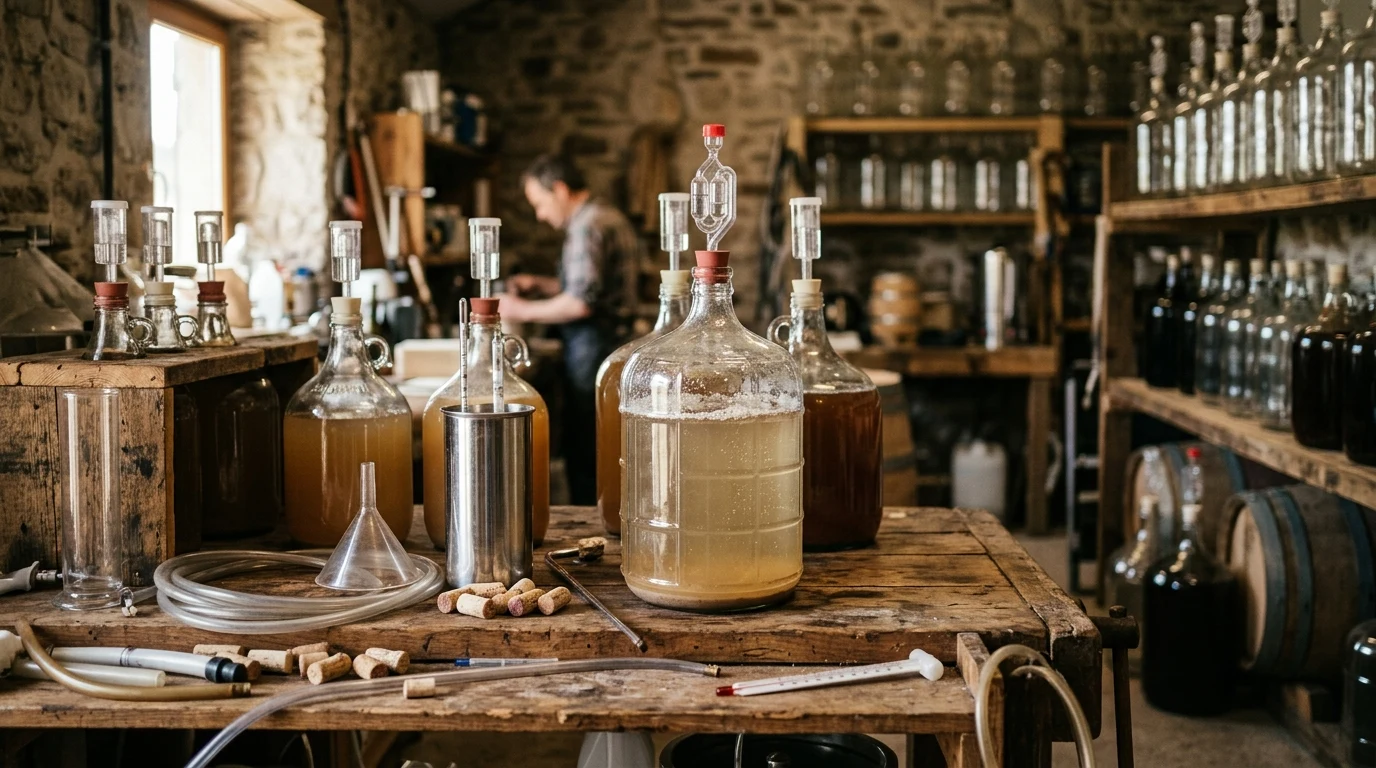
Transforming raw grape must into clear, stabilized, bottled wine requires specialized equipment suited for each stage of vinification. The Beverage People categorizes core equipment into five essential hardware phases:
1. Crushing, Destemming, and Pressing
The mechanical extraction of juice requires non-reactive materials to prevent oxidation and metallic contamination:
- Manual and Motorized Grape Crushers: Stainless steel or enameled hopper units fitted with adjustable food-grade rubber or aluminum rollers designed to crack grape skins without fracturing bitter seeds.
- Ratchet Basket Presses: Heavy-duty beechwood or stainless steel basket presses utilizing hydraulic or mechanical ratchet plates to gently extract press wine without excessive tannin astringency.
- Bladder Presses (Hydropresses): Utilizing standard municipal water pressure (3 bar / 45 psi) to expand an internal rubber bladder, achieving ultra-gentle, uniform extraction across the grape skins with minimal solids.
2. Primary and Secondary Fermentation Vessels
Selecting appropriate fermentation vessels dictates thermal stability, gas exchange, and yeast metabolism during active and secondary phases:
- Food-Grade Primary Fermenters: High-density polyethylene (HDPE) fermenting tubs and buckets fitted with airtight lids and grommeted airlocks, facilitating violent CO2 release and daily punch-downs of red wine caps.
- Italian Demijohns and Glass Carboys: Narrow-neck glass vessels ranging from 3 to 14 gallons (11 to 54 liters), essential for secondary maturation because they eliminate oxygen headspace and prevent spoilage microbes such as Acetobacter.
- Variable-Capacity Stainless Steel Tanks: Cylindrical 304 stainless steel tanks with floating pneumatic lids sealed by an inflatable rubber tube, enabling winemakers to store varying wine volumes without air exposure.
3. Monitoring and Laboratory Analytical Instruments
Amateur winemakers who rely on guesswork frequently face stuck fermentations, off-flavors, or refermentation in the bottle. Laboratory tools supplied by The Beverage People form the backbone of precision home oenology:
- Triple-Scale Specific Gravity Hydrometers: Glass hydrometers calibrated to measure Brix (sugar percentage), potential alcohol by volume (ABV), and specific gravity throughout fermentation.
- Optical and Digital Refractometers: Handheld optical instruments measuring the refractive index of grape juice droplets in the vineyard to evaluate pre-harvest ripening curves.
- Titratable Acidity (TA) Test Kits: Reagents utilizing sodium hydroxide (0.1N NaOH) and phenolphthalein indicator to determine total acidity in grams per liter (tartaric acid equivalent).
- Aeration-Oxidation Free SO2 Assemblies: Precision glassware distillation assemblies that quantify molecular and free sulfur dioxide levels to ensure antimicrobial and antioxidant protection.
Comprehensive Winemaking Equipment & Supplies Comparison Matrix
Understanding which tools are required at each level of production is critical for planning a functional home winery layout:
| Equipment Category | Entry-Level Setup (5–10 Gallons) | Advanced Cellar Setup (50–100+ Gallons) | Critical Function in Vinification |
|---|---|---|---|
| Must Extraction | Hand-crank crusher & wood basket press | Motorized destemmer-crusher & hydro bladder press | Crushes skins without extracting bitter seed tannins; yields clean free-run juice. |
| Primary Fermenter | 7.9-gallon food-grade HDPE bucket with lid | 200L stainless steel open-top variable tank | Accommodates vigorous foaming, CO2 evolution, and regular cap punch-downs. |
| Secondary Vessel | 5 or 6-gallon Italian glass carboys (demijohns) | Speidel HDPE or variable stainless tanks | Minimizes headspace to protect aging wine from oxidative browning and volatile acidity. |
| Analytical Testing | Triple-scale hydrometer & pH test strips | Benchtop digital pH meter & Free SO2 test rig | Monitors yeast sugar consumption, titratable acidity, and antimicrobial protection. |
| Clarification & Transfer | Auto-siphon tubing & sediment trap tip | Enolmatic vacuum filler & plate filter unit | Transfers clean wine off gross lees without splashing oxygen into the liquid. |
| Packaging & Bottling | Hand double-lever corker & crown capper | Heavy-duty Italian floor corker with brass jaws | Inserts natural or agglomerated corks smoothly without scoring or bottle breakage. |
Yeast Strains, Nutrients, and Additives: The Biological Engine
Equipment provides the physical framework, but microbiology dictates sensory quality. The Beverage People has long been recognized for sourcing specialized commercial yeasts (including Lalvin, Red Star, and Fermentis strains) engineered for specific grape varieties and regional styles:
1. Tailored Saccharomyces cerevisiae Strains
- Lalvin EC-1118 (Prise de Mousse): Extremely robust, highly competitive killer yeast known for fast fermentation, low nutrient requirements, and high alcohol tolerance (up to 18% ABV). Ideal for restarting stuck fermentations and crisp sparkling wines.
- Lalvin RC-212 (Bourgovin): Classical Burgundian isolate selected to enhance color stability, extraction of polyphenols, and ripe red fruit aromas in Pinot Noir and lighter red varietals.
- Lalvin D47: Renowned for accentuating barrel-aged white wines, promoting mouthfeel, creamy polysaccharides, and tropical stone fruit notes in Chardonnay and Viognier.
- Lalvin BM45: Sourced from the Brunello di Montalcino region in Tuscany, this strain produces high levels of glycerol, contributing velvety texture, jammy blackberry complexity, and structural longevity to big reds like Cabernet Sauvignon and Sangiovese.
2. Staggered Nutrient Regimes (SNA)
Historically, home winemakers added a single dose of Diammonium Phosphate (DAP) at pitching, frequently causing rapid temperature spikes and late-stage hydrogen sulfide (rotten egg) odors. Modern oenology follows Staggered Nutrient Additions utilizing organic nitrogen sources such as Go-Ferm Protect during rehydration, followed by Fermaid O additions at one-third sugar depletion to sustain healthy yeast populations without chemical off-flavors.
Step-by-Step Methodology: Sourcing Supplies and Planning a Batch
To maximize your home cellar results using the principles curated by The Beverage People, follow this structured execution plan:
- Sanitization and Workspace Sterilization: Thoroughly wash all equipment with unscented sodium percarbonate cleaners, followed by a no-rinse contact soak with potassium metabisulfite solution or Star San.
- Must Preparation and Pre-Fermentation Chemistry: Measure original gravity (aim for 22–25° Brix for dry table wines), pH (ideally 3.3–3.6 for reds, 3.1–3.4 for whites), and adjust titratable acidity with tartaric acid if necessary.
- Enzymatic Maceration and Pectic Breakdown: Introduce food-grade pectic enzymes to white juices for sediment compaction, or macerating enzymes to red grape skins to maximize anthocyanin color extraction.
- Active Fermentation Management: Punch down the floating grape pomace cap 2 to 3 times daily to release heat, submerge skins, and prevent bacterial growth on the cap surface.
- Pressing and Malolactic Fermentation: Press wine when specific gravity drops near 1.000, then rack into airtight glass carboys. Inoculate with Oenococcus oeni bacterial cultures to convert harsh malic acid into soft, velvety lactic acid.
- Fining, Cold Stabilization, and Bottling: Clarify using bentonite, sparkalloid, or egg whites if required, chill to stabilize potassium bitartrate crystals, and bottle using an Italian floor corker for cellar preservation.
Frequently Asked Questions (FAQ)
What is The Beverage People best known for in the home winemaking community?
The Beverage People is best known as a premier educational authority and supplier of professional-grade winemaking, brewing, and distilling equipment located in Santa Rosa, Sonoma County, California. They provide amateur and commercial craft producers with specialized yeasts, laboratory reagents, testing equipment, and instructional recipe books.
What is the minimum equipment required to make wine at home?
The minimum required kit includes a food-grade 7.9-gallon plastic fermenting bucket with an airtight lid and bubbler airlock, a 5-gallon glass carboy, a triple-scale hydrometer with test jar, a siphon tube with an auto-siphon cane, potassium metabisulfite sanitizer, and a hand or floor corker with wine bottles and corks.
Can you use bread yeast or baking yeast to make wine?
No, bread yeast is not bred for oenology. It has low alcohol tolerance (typically dying around 6–8% ABV), produces unpleasant bread-like and sulfurous off-flavors, and fails to clarify cleanly. Always use certified wine yeast strains such as Lalvin or Red Star tailored to your grape variety.
How does a hydrometer measure alcohol in homemade wine?
A hydrometer measures the relative density of the liquid compared to water. By recording the starting specific gravity (Original Gravity or Brix) before yeast is pitched and comparing it to the Final Gravity after all sugars are fermented dry, you calculate the alcohol content using the formula: ABV = (Original Gravity – Final Gravity) * 131.25.
Get our latest guides, news, and insights highlighted in your Google Search & AI Overviews.